

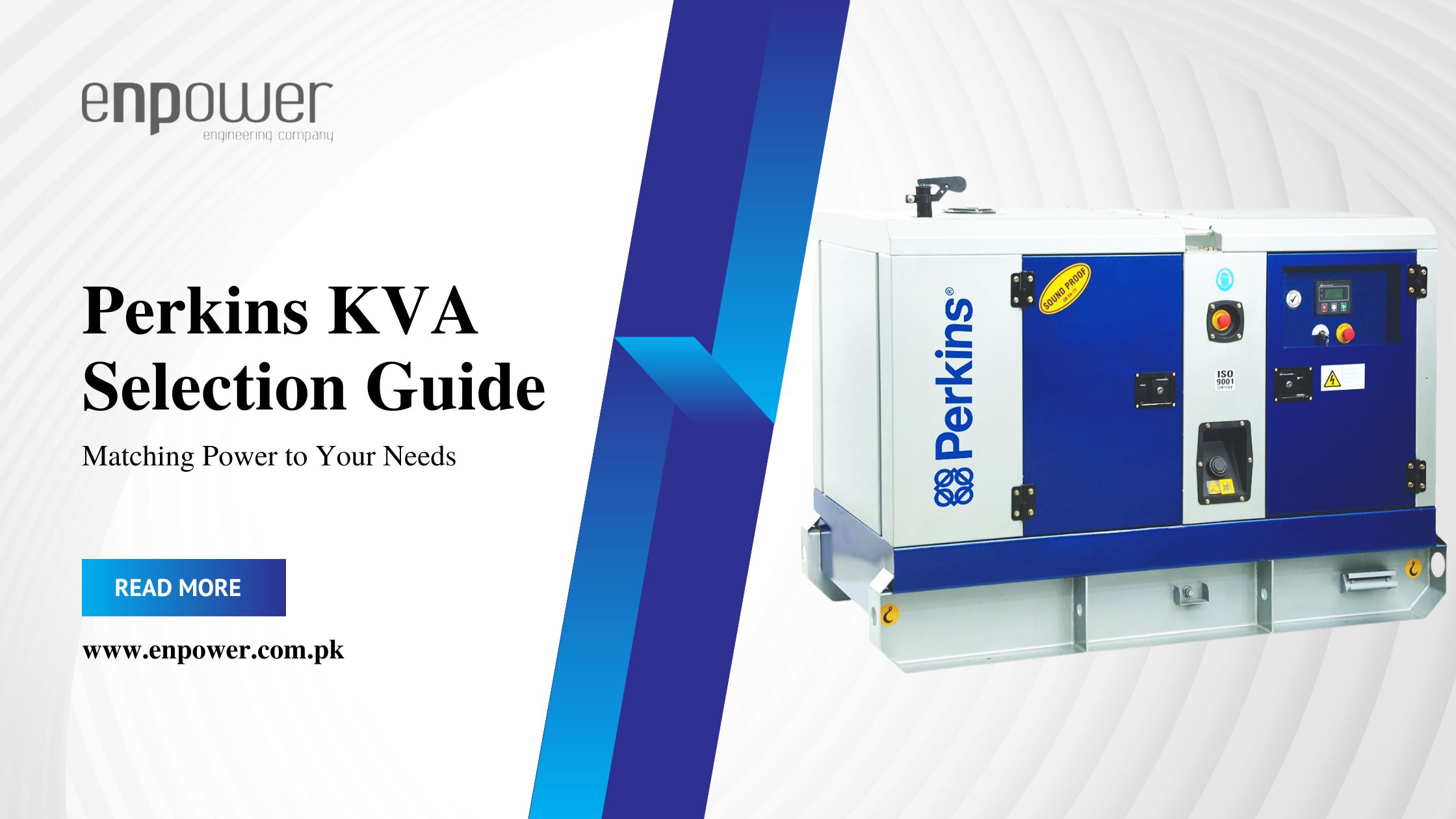
Choosing the right generator size is the most critical step in securing a reliable power backup. If the KVA is too low, your generator will overlook and shut down; if it’s too high, you’ll waste thousands in unnecessary fuel costs. At Enpower, we believe in providing “Right-Sized” solutions. This guide will help you navigate the Perkins range from 10KVA to 1375KVA to find the perfect match for your requirements.
1. Step 1: Understand Your Load Requirements
Before looking at models, list everything you need to run during a power outage.
- Essential Load: Lights, fans, and security systems.
- Heavy Load: Air conditioners (Inverter vs. Non-Inverter), water pumps, and elevators.
- Industrial Load: CNC machines, textile looms, and heavy motors. Pro Tip: Always add a 20% safety margin to your total calculated load to account for “starting current” (the extra surge of power needed to start motors and ACs).
2. Step 2: Choose Your Category
Based on our technical data, we can categorize the Perkins range into three main tiers:
A. Residential & Small Retail (10KVA – 33KVA)
If you are looking to power a home or a small shop, models like the EPG10 or EPG33 are ideal. These are compact, fuel-efficient, and fit easily into residential spaces with soundproof canopies.
B. Commercial & Office Use (50KVA – 150KVA)
For restaurants, banks, and medium-sized offices, the EPG110 or EPG150 models provide the necessary stability. These units handle multiple AC units and office servers simultaneously without breaking a sweat.
C. Industrial & Mega Projects (200KVA – 1375KVA)
For 24/7 manufacturing plants, hospitals, and large-scale infrastructure, the heavy-duty Perkins series (like the EPG1000) is built for high-endurance performance and maximum load acceptance.
3. Step 3: Prime Power vs. Standby Power
When viewing the Enpower Perkins Data Sheets, you will see two ratings:
- Prime Power: Use this rating if the generator will be your primary source of power or will run for long hours daily.
- Standby Power: This is the maximum limit for emergency use for short durations.
Rule of Thumb: Never run your generator at 100% of its Standby rating for extended periods.
4. Step 4: Consider the Location (Environment)
The environment affects performance. If your site is in an area with extreme heat (like interior Sindh or Punjab) or high altitude, the engine may “derate” (produce slightly less power). Enpower’s engineers help you choose a Perkins model with the right cooling system to handle Pakistan’s specific climate.
Conclusion
A Perkins generator is an investment in peace of mind. Whether it’s the compact 10KVA or the massive 1375KVA giant, selecting the right size ensures longevity, fuel savings, and safety. Still unsure? Enpower’s technical team is available for a free site visit and load audit to help you make the right choice.
Frequently Asked Questions
What happens if I buy a generator with a KVA rating that is too small?
The generator will struggle with the load, leading to frequent shutdowns, overheating, and potential damage to both the generator engine and your appliances.
Is it okay to run a large generator on a very small load?
No. This is called “Wet Stacking.” Running a large Perkins engine on less than 30% load can cause unburnt fuel to build up in the exhaust, reducing the engine’s life.
How do I convert Watts into KVA?
The simple formula is: KVA = Watts / (Power Factor x 1000). Usually, for generators, a power factor of 0.8 is used. Our team can do these calculations for you!
Do all Perkins models from Enpower come with a warranty?
Yes, all our genuine Perkins generators come with a standard international warranty, ensuring your investment is protected.
Can I upgrade my KVA capacity later?
While you cannot change the engine’s capacity, you can synchronize a new Perkins generator with your existing one to increase total power output as your business grows.