

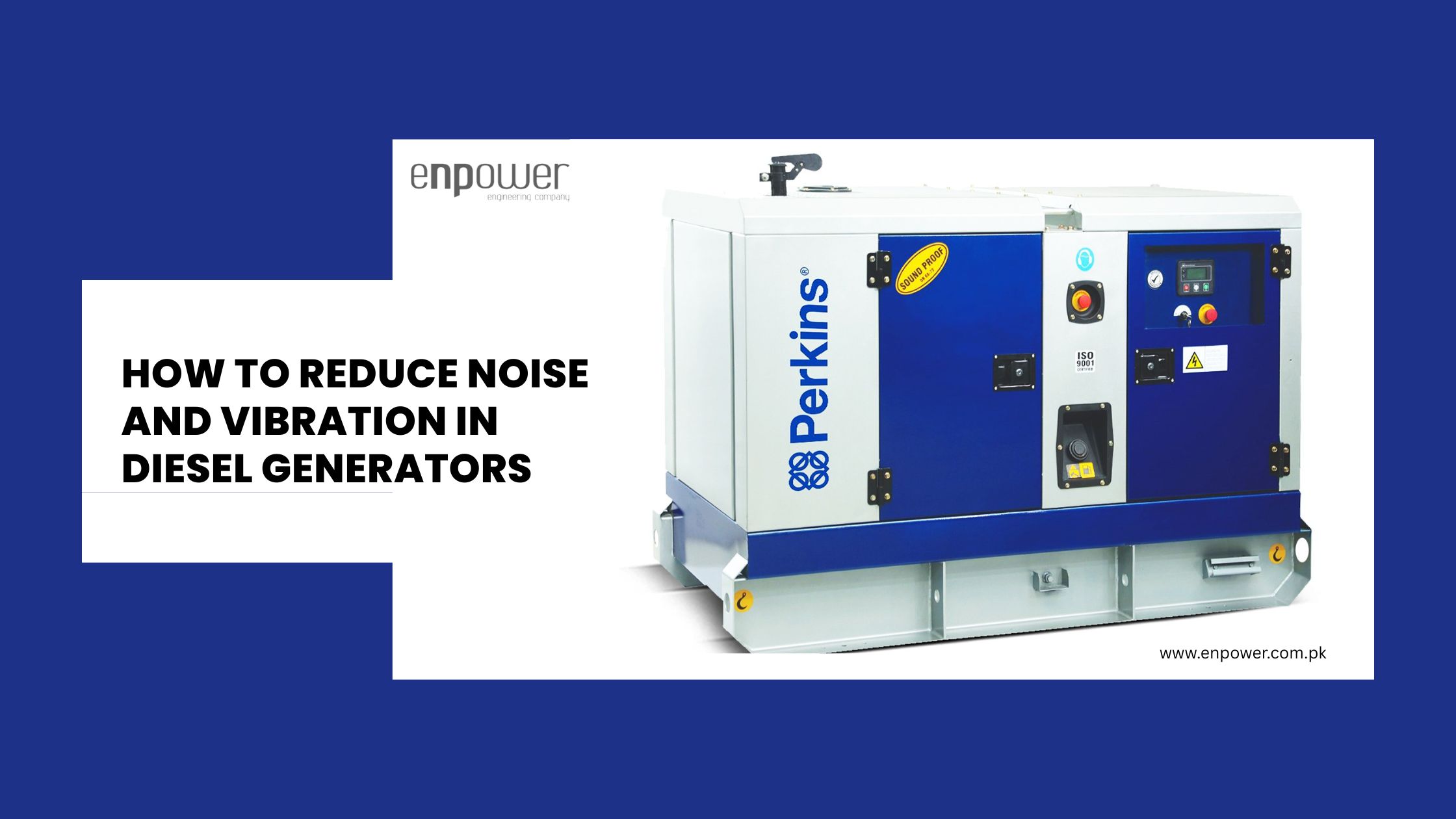
While diesel generators are essential for power backup in Pakistan, the noise and vibration they produce can be a major nuisance. Excessive noise can disrupt sleep in residential areas and decrease productivity in office environments. Fortunately, with the right equipment and maintenance from Enpower, you can significantly quiet your generator. Here is a guide on how to minimize noise and vibration for a more peaceful environment.
1. Use High-Quality Soundproof Canopies (Acoustic Enclosures)
The most effective way to reduce noise is by using a specialized canopy.
- Enpower’s Soundproof Canopies: Our enclosures are lined with high-density, fire-retardant acoustic foam that absorbs sound waves before they leave the unit.
- A professional canopy can reduce the noise level of a Perkins engine to as low as 70-75 dB at 7 meters, which is comparable to a normal conversation.
2. Install Anti-Vibration Mounts (AVMs)
Vibration is often the root cause of structural noise. If a generator is bolted directly to a concrete floor, the vibrations travel through the building.
- Rubber Isolators: Installing heavy-duty rubber mounts between the engine and the base frame absorbs kinetic energy.
- Spring Mounts: For larger industrial units (200kVA+), spring isolators are used to prevent tremors from shaking the surrounding structure.
3. Upgrade to High-Performance Exhaust Silencers
Much of a generator’s noise comes from the exhaust gases exiting the engine.
- Residential Grade Mufflers: If your generator came with a standard industrial silencer, upgrading to a “Residential Grade” or “Hospital Grade” silencer can reduce noise by an additional 15-25 dB.
- Ensure the exhaust pipe is properly insulated to prevent “rattling” against the canopy walls.
4. Proper Installation on a Concrete Plinth
The surface where your generator sits matters.
- A thick, level concrete pad (plinth) acts as a mass damper, absorbing low-frequency vibrations.
- Ensure the generator is perfectly level; an imbalanced unit will vibrate significantly more, leading to premature wear and louder operation.
5. Regular Maintenance and Tightening
A well-maintained engine runs smoother and quieter.
- Loose Parts: Over time, bolts and panels can loosen, causing a “clattering” sound. Regularly tightening all fasteners is a simple way to reduce noise.
- Engine Tuning: Ensure your Perkins or Hyundai engine is properly tuned. A misfiring engine or one with clogged injectors will vibrate violently compared to a smoothly running unit.
Conclusion
Reducing generator noise is about combining the right hardware with smart installation. By investing in Enpower’s acoustic solutions and following a strict maintenance routine, you can enjoy reliable power without the headache of loud noise.
Frequently Asked Questions
What is the ideal noise level for a residential generator?
For residential areas in Pakistan, a noise level of 65 to 75 dB is usually acceptable. It should not disturb neighbors too much.
Can I build my own soundproof room for a generator?
While possible, it is risky. Generators need massive amounts of airflow for cooling. A DIY room without proper ventilation can cause the engine to overheat and seize. Enpower’s canopies are engineered for both silence and airflow.
Why has my generator suddenly become louder?
Sudden noise increases are usually due to a damaged exhaust silencer, loose engine mounts, or a mechanical issue within the engine itself. You should call a technician immediately.
Do smaller kVA generators produce less vibration?
Generally, yes. However, even a 10kVA unit can be loud if it isn’t placed on rubber mounts. Correct installation is key regardless of size.
Are Perkins engines quieter than other brands?
Yes, Perkins engines are known for their precision engineering and smooth combustion cycles, which naturally produce less mechanical noise and vibration than lower-quality alternatives.