

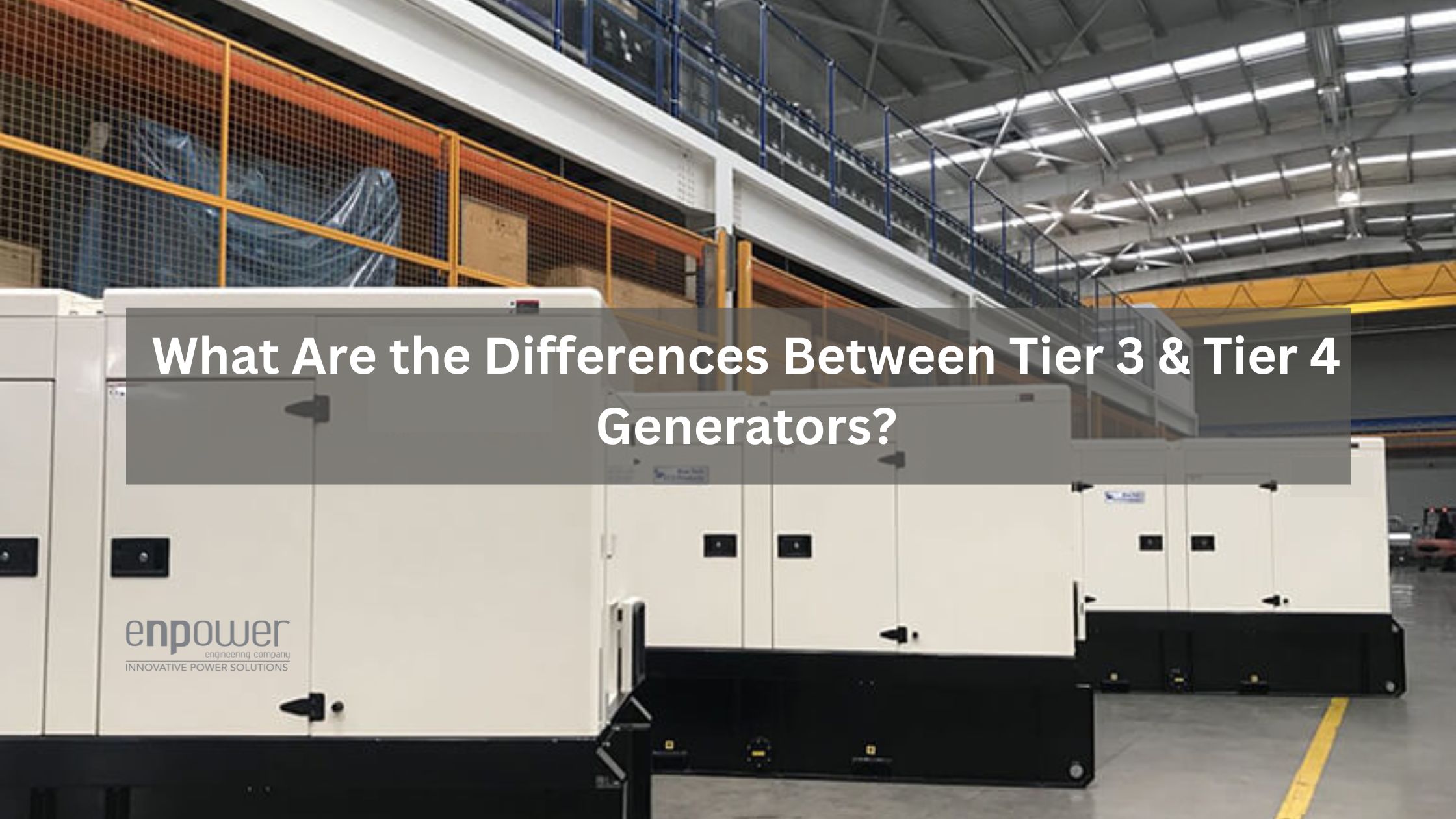
Tier 3 vs Tier 4 generators is one of the most searched comparisons when businesses, contractors, and industrial users look for compliant and efficient power solutions. Understanding the difference between Tier 3 vs Tier 4 generators helps you meet EPA emissions regulations while balancing performance, cost, and maintenance requirements.
In this guide, we explain everything you need to know about Tier 3 vs Tier 4 generators, including emissions standards, fuel efficiency, operating costs, and how to choose the right generator for your application.
Tier 3 vs Tier 4 Generators: Understanding EPA Emissions Tiers
The Environmental Protection Agency (EPA) introduced emissions tiers to control pollution from non-road diesel engines such as generators, construction equipment, and agricultural machinery. These standards focus on reducing harmful pollutants like nitrogen oxides (NOx), particulate matter (PM), carbon monoxide (CO), and hydrocarbons (HC).
When comparing Tier 3 vs Tier 4 generators, the key difference lies in how strictly emissions are regulated and the technologies used to achieve compliance.
Tier 3 Generators: Features, Benefits, and Limitations
Tier 3 generators were introduced around 2006 as a major improvement over earlier diesel engines. Compared to Tier 2 models, Tier 3 generators reduced NOx and PM emissions by nearly 50% through improved combustion and engine optimization.
Key Features of Tier 3 Generators
- Moderate Emissions Reduction: Tier 3 generators offer cleaner performance than older engines while remaining simpler than Tier 4 systems.
- Improved Fuel Efficiency: Better combustion technology helps lower fuel consumption and operational costs.
- Simpler Engine Design: Tier 3 engines typically do not require diesel particulate filters (DPF) or selective catalytic reduction (SCR) systems.
- Lower Maintenance Requirements: Fewer after-treatment components make Tier 3 generators easier and cheaper to maintain.
When Tier 3 Generators Make Sense
In the Tier 3 vs Tier 4 generators comparison, Tier 3 models are ideal for regions with less strict emissions regulations or for users seeking a cost-effective and reliable power solution without complex maintenance needs.
Tier 4 Generators: Advanced Technology and Ultra-Low Emissions
Tier 4 standards, phased in between 2008 and 2015, represent the most stringent EPA emissions regulations for non-road diesel engines. In the Tier 3 vs Tier 4 generators debate, Tier 4 generators clearly lead in environmental performance.
Tier 4 generators can reduce NOx and PM emissions by up to 90% compared to Tier 3 generators. This is achieved through advanced after-treatment technologies.
Key Features of Tier 4 Generators
- Ultra-Low Emissions: Tier 4 generators significantly reduce harmful exhaust pollutants, supporting sustainability goals.
- Advanced After-Treatment Systems: Includes DPF, SCR, and diesel oxidation catalysts (DOC).
- High Fuel Efficiency: Despite their complexity, Tier 4 generators often deliver better fuel efficiency under high-load conditions.
- Regulatory Compliance: Mandatory in many regions with strict environmental laws.
Maintenance Considerations for Tier 4 Generators
When comparing Tier 3 vs Tier 4 generators, maintenance is a critical factor. Tier 4 generators require regular DPF cleaning or replacement, SCR system upkeep, and monitoring of emissions components, which can increase long-term operating costs.
Tier 3 vs Tier 4 Generators: Side-by-Side Comparison
| Feature | Tier 3 Generators | Tier 4 Generators |
|---|---|---|
| Emissions Level | Moderate | Ultra-low |
| EPA Compliance | Limited regions | Mandatory in strict regions |
| After-Treatment Systems | Not required | DPF, SCR, DOC |
| Maintenance Cost | Lower | Higher |
| Fuel Efficiency | Good | Excellent (especially high load) |
| Upfront Cost | Lower | Higher |
Choosing Between Tier 3 vs Tier 4 Generators
Selecting between Tier 3 vs Tier 4 generators depends on several operational and regulatory factors.
Regulatory Requirements
If your location enforces Tier 4 compliance, a Tier 4 generator is mandatory. In regions with flexible regulations, Tier 3 generators may still be permitted.
Budget Considerations
Tier 4 generators have a higher upfront cost due to advanced emissions technology. In contrast, Tier 3 generators are more affordable initially, making them attractive for budget-conscious buyers.
Maintenance Capability
Businesses without access to specialized maintenance infrastructure may prefer Tier 3 generators. Tier 4 generators require skilled servicing to maintain emissions compliance.
Environmental Impact
For organizations focused on sustainability, Tier 3 vs Tier 4 generators clearly favors Tier 4 models due to their significantly lower emissions and reduced environmental footprint.
Conclusion
The decision between Tier 3 vs Tier 4 generators comes down to compliance, cost, maintenance, and environmental responsibility. Tier 4 generators deliver superior emissions control and fuel efficiency but require higher investment and maintenance. Tier 3 generators, on the other hand, offer a simpler, cost-effective solution with moderate emissions reductions.
Understanding the difference between Tier 3 vs Tier 4 generators ensures you select a power solution that meets both your operational needs and regulatory obligations.
Frequently Asked Questions
What is the main difference between Tier 3 vs Tier 4 generators?
The primary difference is emissions control. Tier 4 generators use advanced after-treatment systems to achieve much lower NOx and PM emissions compared to Tier 3 generators.
Are Tier 4 generators more expensive than Tier 3 generators?
Yes, Tier 4 generators typically have higher upfront and maintenance costs due to complex emissions systems, but they may offer better long-term fuel efficiency.
Can Tier 3 generators still be used legally?
It depends on local regulations. Some regions allow Tier 3 generators, while others require Tier 4 compliance.
Do Tier 4 generators offer better fuel efficiency?
In many cases, yes. Tier 4 generators often perform more efficiently under heavy load conditions.
What maintenance is required for Tier 4 generators?
Tier 4 generators require DPF cleaning, SCR maintenance, and regular emissions system monitoring to ensure compliance and performance.