

Blog
How to Prevent Rust and Corrosion in Diesel Generators

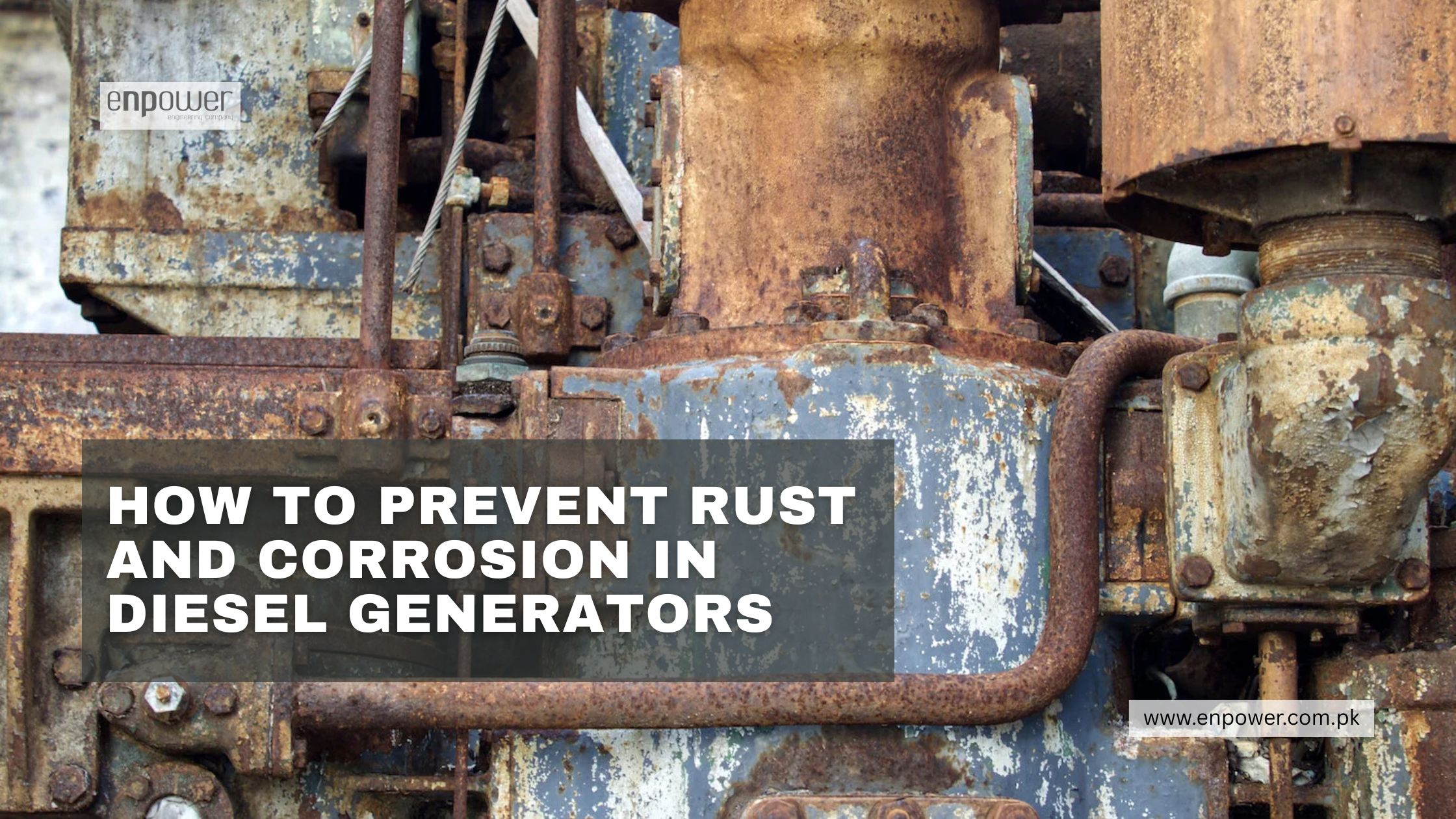
A diesel generator is a significant investment for any home or business in Pakistan. However, environmental factors like humidity, monsoon rains, and coastal salt air (especially in cities like Karachi) can lead to rust and corrosion. If left unchecked, corrosion can damage the fuel tank, degrade the radiator, and cause electrical failures. Protecting your Perkins or Hyundai generator from rust is essential for ensuring long-term reliability and high resale value.
1. Invest in a High-Quality Soundproof Canopy
The first line of defense against the elements is a premium enclosure.
- Enpower’s specialized canopies are treated with anti-corrosive powder coating.
- A well-sealed canopy prevents rainwater and dust from settling on the engine components, which is the primary cause of oxidation (rust).
2. Control Moisture and Humidity
Moisture is the enemy of metal. Even inside a canopy, condensation can form.
- Keep it Dry: Ensure the generator is installed on a raised concrete plinth (pad) to prevent water from pooling at the base.
- Anti-Condensation Heaters: For industrial units, using small heaters can keep the alternator windings dry and prevent internal rust.
3. Regular Cleaning and Debris Removal
Dust and dirt can trap moisture against metal surfaces, accelerating corrosion.
- Wipe down the exterior of the engine and the interior of the canopy regularly.
- Ensure the radiator fins are clear of debris; trapped dirt combined with moisture can quickly lead to radiator leaks.
4. Monitor the Cooling System (Anti-Freeze & Corrosion Inhibitors)
Corrosion doesn’t just happen on the outside; it can happen inside the engine too.
- Coolant Quality: Always use the manufacturer-recommended coolant. These fluids contain corrosion inhibitors that protect the internal water jacket and radiator from scaling and rusting.
- Never use plain tap water, as the minerals in it cause rapid internal corrosion.
5. Protect the Fuel System
Rust inside a fuel tank can clog filters and damage injectors.
- Keep the Tank Full: A full tank leaves less room for air. Moist air in a half-empty tank leads to condensation, which settles at the bottom and causes rust.
- Water Separators: Ensure your generator has a high-quality fuel-water separator (standard on Perkins models from Enpower) and drain it regularly.
6. Use Protective Coatings
For generators located in high-moisture or coastal areas, applying a thin layer of specialized anti-rust lubricant or clear-coat spray on exposed bolts and terminals can provide an extra layer of protection.
Conclusion
Rust is a silent killer of machinery, but it is entirely preventable. By following a strict maintenance schedule and using the high-quality protective enclosures provided by Enpower, you can ensure your diesel generator remains in “zero-meter” condition for years to come.
Frequently Asked Questions
Does rust on the exterior of the generator affect its performance?
While surface rust on the canopy might look bad, rust on the engine block, battery terminals, or radiator can lead to overheating, electrical shorts, and structural failure. It is best to treat any sign of rust immediately.
How often should I check for corrosion?
You should perform a visual inspection at least once a month. During the monsoon season or in coastal areas, a bi-weekly check is recommended.
Can I paint over rust on my generator canopy?
You should first sand down the rusted area to bare metal, apply a rust-inhibitor primer, and then use high-quality weather-resistant paint to seal it properly.
Why is my generator’s battery terminal corroding?
This is usually due to hydrogen gas venting or moisture. Clean the terminals with a wire brush and apply a thin coating of petroleum jelly or terminal protector spray to prevent future buildup.
Are Perkins generators more resistant to rust?
Perkins engines are built with high-grade alloys, and when coupled with Enpower’s professionally manufactured canopies, they offer superior resistance to environmental corrosion compared to unbranded alternatives.