

How to Test Your Diesel Generator Before an Emergency: A Complete Guide

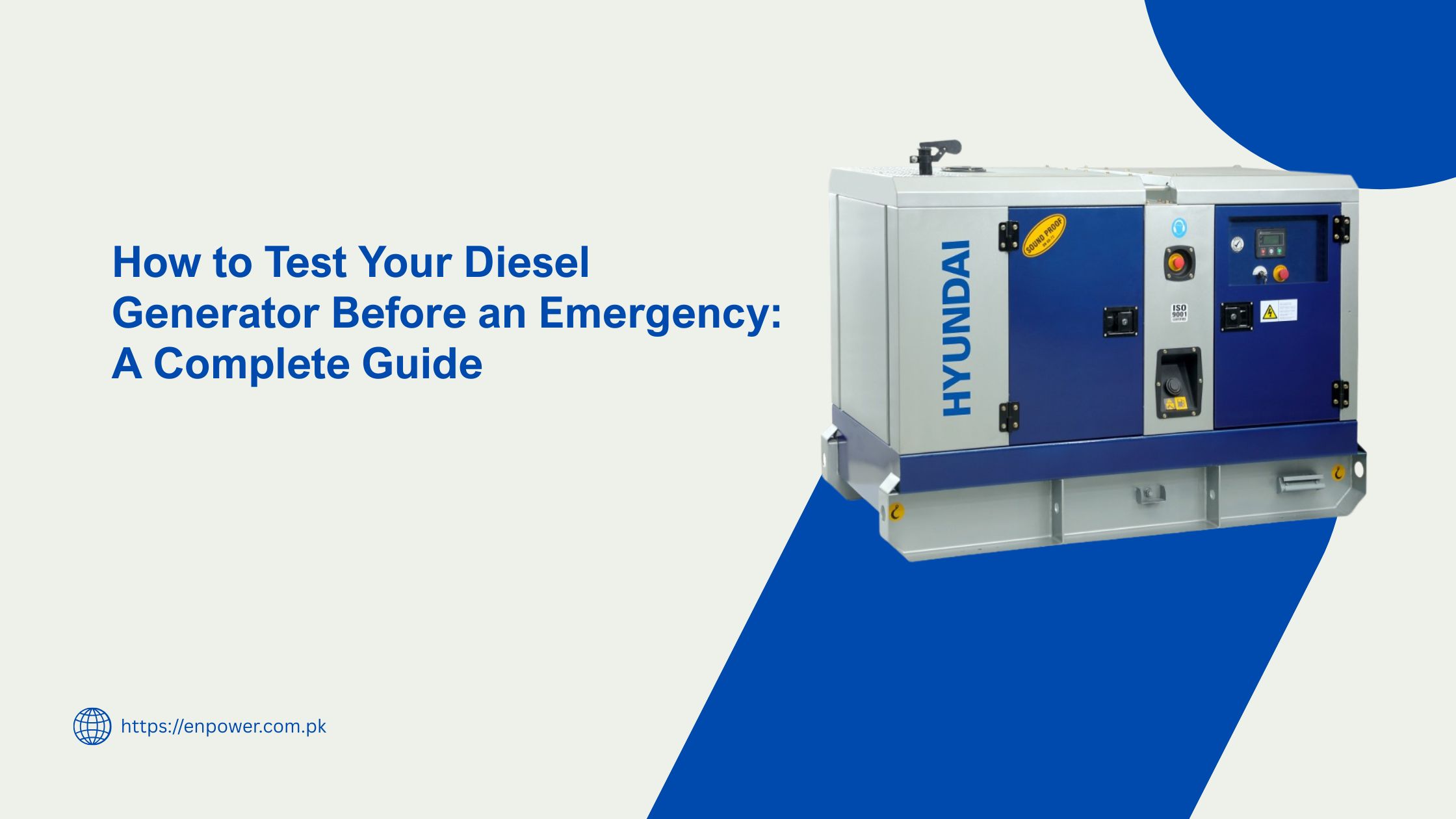
In Pakistan, a power outage isn’t just an inconvenience; for businesses and large homes, it can stop productivity entirely. Whether you own a high-end Perkins Generator or a versatile Hyundai Generator, your backup power is only as good as its last test. Waiting for a blackout to find out your system has a “starting problem” is a risk you shouldn’t take.
At Enpower Engineering, we understand that reliability is everything. Here is a professional yet simple guide on how to test your diesel generators to ensure they are ready when you need them most.
1. The Pre-Test Visual Inspection
Before hitting the start button, perform a “walk-around” inspection. This is the first step any Perkins parts dealer in Pakistan would recommend to prevent engine damage.
- Check Fluid Levels: Ensure the oil and coolant are at the required marks. For diesel generators in Pakistan, extreme heat can cause coolant to evaporate faster than expected.
- Look for Leaks: Check the ground for puddles of oil or fuel.
- Battery Health: Most generator failures are due to dead batteries. Ensure the terminals are clean and the charge is sufficient.
2. Perform a No-Load Exercise
Start your power generator and let it run for about 10–15 minutes without connecting it to your building’s electrical load.
- Listen to the Engine: Does it sound smooth? Any unusual vibrations or knocking sounds could indicate a mechanical issue.
- Exhaust Check: A little smoke at startup is normal, but persistent thick black or white smoke suggests fuel or coolant leaks.
3. The “Real World” Load Test
This is the most critical step. A generator might run fine on its own, but fail once you turn on the ACs and machinery.
- Switch your ATS (Automatic Transfer Switch) or manual changeover to the generator.
- Monitor how the engine responds to the sudden demand.
- Running your unit at 50%–70% load for at least 30 minutes once a month prevents “wet stacking” (carbon buildup in the exhaust), which is common in diesel generators.
4. Market Context: Choosing the Right Unit
If you are currently looking to upgrade or install a new system, understanding the market is key.
- Hyundai Generator Price in Pakistan: Currently, Hyundai remains a favorite for those seeking digital control panels and easy operation at a competitive price point.
- Perkins Reliability: For industrial-grade heavy lifting, Perkins is the gold standard. As a trusted provider, we ensure that every unit—from generators in lahore to remote industrial sites—meets international safety standards.
5. Professional Maintenance Checklist
To maintain your SEO-optimized performance and engine life, keep these local factors in mind:
- Dust Protection: Lahore’s air can be dusty. Clean your air filters every 250 hours of operation.
- Genuine Parts: Always source components from a verified Perkins parts dealer in pakistan to avoid counterfeit filters that can ruin your engine.
- Fuel Quality: Ensure your diesel is fresh. Contaminated fuel is the #1 cause of injector failure in Pakistan.
Conclusion
Testing your generator shouldn’t be a once-a-year event. A monthly 30-minute check ensures your investment stays protected. If you notice any fluctuations in voltage or unusual noises during your test, it’s time for a professional audit.
Looking for reliable power solutions? Explore our range of Perkins and Hyundai Generators at Enpower Engineering. We provide the most robust diesel generators in Pakistan with full installation and maintenance support.
Frequently Asked Questions
Can a diesel generator run 24 hours a day?
Yes, most industrial-grade diesel generators are designed for continuous use. However, they are not “perpetual motion” machines. To run a unit for 24 hours safely, you must monitor fuel levels, ensure the cooling system is functioning perfectly (especially in the heat of Lahore), and check oil levels. For long-term 24/7 operation, you should ideally have two generators to “cycle” them, allowing one to rest and undergo maintenance.
What is the most reliable brand of generator?
Reliability often depends on the engine and the support available. In the Pakistani market, Perkins Generator is widely considered the gold standard for heavy-duty industrial reliability due to its robust build. For those looking for a balance of modern technology and value, the Hyundai Generator is exceptionally reliable for commercial and residential backup. Both brands are top choices at Enpower Engineering because of their proven track record.
Is it okay to leave a generator running all night?
It is safe to leave a power generator running all night, provided it is installed in a well-ventilated outdoor area. Modern units come with auto-shutdown features for low oil or overheating to prevent damage. However, for peace of mind, we recommend a “load check” before you head to bed to ensure it isn’t being overstrained by heavy appliances like multiple AC units.
How to test a diesel generator?
Testing involves three main steps:
- Visual Check: Inspect for leaks, loose wires, and fluid levels.
- No-Load Exercise: Run the generator for 10–15 minutes to circulate oil.
- Load Testing: Every month, run the generator with your building’s actual electrical load for 30 minutes. This prevents “wet stacking” and ensures the alternator can handle the demand during a real emergency.
What is the 80% rule for generators?
The 80% rule is a safety and efficiency guideline which states that you should never consistently run your generator at more than 80% of its rated capacity. For example, if you have a 100kVA unit, you should aim for a maximum continuous load of 80kVA. This prevents overheating, reduces wear and tear, and ensures your unit has “buffer room” for the high starting current required by motors and compressors.
What is the 20/20/20 rule for generators?
This is a maintenance rule of thumb used by many experts to ensure longevity:
- 20% Minimum Load: Never run a diesel generator at less than 20% load for long periods, as this causes carbon buildup (wet stacking).
- 20% Reserve Power: Always leave 20% of the generator’s capacity unused to handle sudden power surges.
20-Minute Cool Down: After running under heavy load, let the generator run for about 5–10 minutes (or up to 20 mins for very large units) without any load before turning it off. This allows the turbocharger and engine components to cool down gradually.